
Application of electronic document management strategies with multi-criteria techniques for medical records of the Santa Rosa Health Center, Ambato.
Article Sidebar
Main Article Content
Abstract
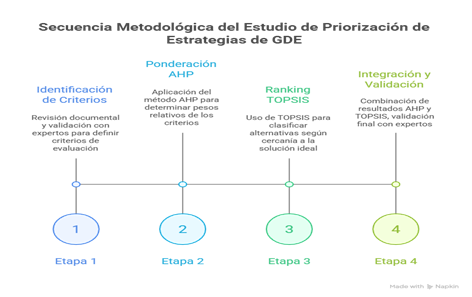
This study aimed to analyze and prioritize electronic document management strategies by integrating multicriteria methods specifically AHP (Analytic Hierarchy Process) and TOPSIS (Technique for Order of Preference by Similarity to Ideal Solution) to optimize the management of medical records in a public health context. The specific objectives focused on: (1) identifying the critical criteria that influence electronic document management in the health sector, (2) applying multicriteria techniques to evaluate technological alternatives, and (3) proposing a priority strategy to strengthen the efficiency, traceability, and security of clinical information at the Santa Rosa Health Center.
The results obtained through AHP analysis showed that the criteria with the greatest decisional weight were impact on operational efficiency (28,9%) and ease of use and adoption by staff (11.7%), reflecting a clear focus on usability and operational improvement. Subsequently, the application of the TOPSIS model determined that the most favorable alternative was progressive digitization with a hybrid (physical-electronic) archive, with a score of 0.93, followed by the development of a proprietary electronic document management system (0.51). These findings suggest that a gradual, hybrid strategy is the most viable option for public institutions with budgetary constraints and traditional organizational structures.
ritical and comparative analysis with previous studies [12], [16] confirms the effectiveness of the multi-criteria approach in technology prioritization processes within the public sector, although it highlights the need to strengthen institutional capacities for the full adoption of digital systems. Furthermore, a convergence is identified with research that underscores the importance of the human component in digital transformation [10], as well as with theories of organizational change management and technological innovation [9].
The implications of this study extend beyond the scope of the analyzed case, providing a replicable methodological basis for strategic decision-making in public health settings. From a practical perspective, the results guide health authorities on the need to combine operational efficiency with financial sustainability and staff acceptance. However, limitations related to sample size and institutional scope are acknowledged, which opens the door for future research integrating socio-technical variables and predictive models based on artificial intelligence.
In conclusion, this research contributes to strengthening the theoretical and methodological framework for prioritizing electronic document management strategies in the Ecuadorian context, positioning itself as a significant contribution to digital public management in the knowledge economy.
Downloads
Article Details

This work is licensed under a Creative Commons Attribution 4.0 International License.