
Neutrosophic Z-Rough Set Aggregation Operator for University English Immersive Teaching Effectiveness Evaluation Based on Virtual Reality Technology
Keywords:
Neutrosophic Z-Rough Set Aggregation Operator; University English Immersive; Teaching Effectiveness Evaluation; Virtual Reality Technology.Abstract
Immersion language learning has revolutionary potential when Virtual Reality (VR)
technology is used into university-level English education. This research assesses how well
university students' English proficiency may be improved by VR-based immersive instruction.
The study investigates how VR-supported learning environments enhance educational results by
utilizing four primary criteria: cognitive load and usability, learning engagement, real-world
communication simulation, and language competency enhancement. Eight different instructional
methods, such as role-playing, virtual campus visits, and public speaking simulations, were
evaluated. A neutrosophic framework was used to examine the data. The neutrosophic set is
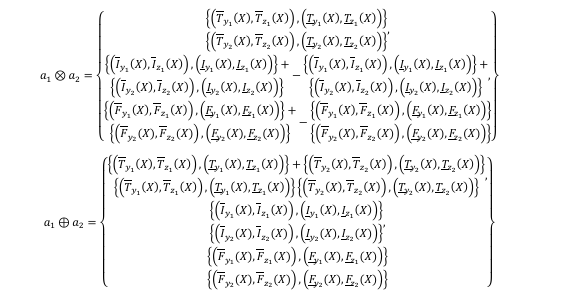
used to overcome uncertainty. We use the Neutrosophic Z-Rough Set (NZRS) to evaluate the
criteria and alternatives. The aggregation operators of NZRS is used to combine different
numbers. Although usability and cognitive demands are still important factors, the results show
that immersive VR experiences greatly increase engagement and real-world language
application. For educators and organizations looking to implement immersive technology in
language training, this review offers evidence-based ideas.
Downloads
Downloads
Published
Issue
Section
License
Copyright (c) 2025 Neutrosophic Sets and Systems

This work is licensed under a Creative Commons Attribution 4.0 International License.