
Assessing viral susceptibility in tilapia species using plithogenic fuzzy soft set: a multi-expert approach for TiLV
Keywords:
Viral Susceptibility, Tilapia, Tilv, Fuzzy Sets, Multi-Expert Modeling, Aquaculture, EpidemiologyAbstract
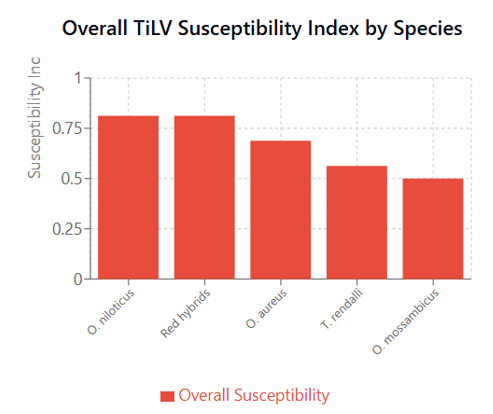
This research assessed tilapia species susceptibility to Tilapia Lake Virus (TiLV) via a new plithogenic fuzzy soft set (CFS). This mathematical conception offers a holistic assessment via biological, environmental, and epidemiological attributes, merging unknown and variable data across multiple researching experts. Thus, the findings emerged from controlled and field assessed mortality, viral titers, and microenvironments of up to five species processed through the CFS model to determine vulnerability rankings. CFS revealed Oreochromis niloticus was the most susceptible to TiLV with red hybrids second and O. mossambicus most resistant. In addition, the CFS model revealed specific parameters, including temperature and population density, which can increase transmission. These results suggest that multi-expert assessments and fuzzy modeling are invaluable for future prediction of viral epidemics in aquaculture. Ultimately, species vulnerability will allow for species-specific management and increased awareness during critical temperature or population density situations to decrease the economic impact of TiLV in the tilapia industry. This assessment is an ideal decision support system for aquaculture health under imperfect conditions.

Downloads
Downloads
Published
License
Copyright (c) 2025 Neutrosophic Sets and Systems

This work is licensed under a Creative Commons Attribution 4.0 International License.