
A visual aid-based model for constructing the concept of probability for students aged 9 to 11, validated using neutrosophic plithogenic statistics
Keywords:
Narrative, Visual Thinking, Problem Solving, Truth, Indeterminacy, Falsehood, NeutrosophicAbstract
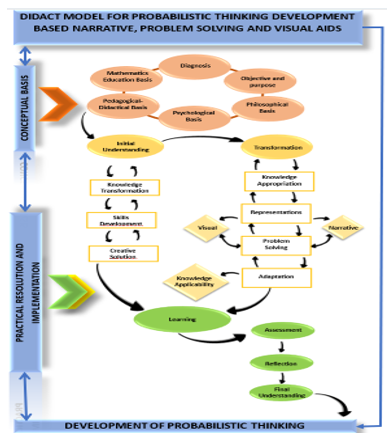
This article discusses a research endeavor whose intent was to further develop statistical reasoning by formulating probability notions for 9-11-year-old learners. The probability endeavor is formulated through a union of narrative, problem-solving and visual approaches. Action research allowed for formulation and implementation within a school setting, satisfactorily proving success in developing learners' abilities to think logically and critically. Results indicate a statistically significant probability of appropriating the notion of probability based on neutrosophic plithogenic statistics which assessed the degree of truth, indeterminacy, and falsity of student answers which ultimately promote rational decisions in uncertain situations. It's recommended that the union of narrative, visual and heuristic approaches in tandem with neutrosophic findings allow for incremental attainment of probabilistic understanding, creating a more involved, meaningful and applicable mathematics experience.

Downloads
Downloads
Published
License
Copyright (c) 2025 Neutrosophic Sets and Systems

This work is licensed under a Creative Commons Attribution 4.0 International License.