
Neutrosophic Framework for Violence Prediction in Urban Environments: A Hybrid Approach Integrating fsQCA and Machine Learning for Public Safety Decision-Making
Keywords:
Neutrosophic Logic, Violence Prediction, fsQCA, Machine Learning, Citizen Security, Hybrid Systems, Decision MakingAbstract
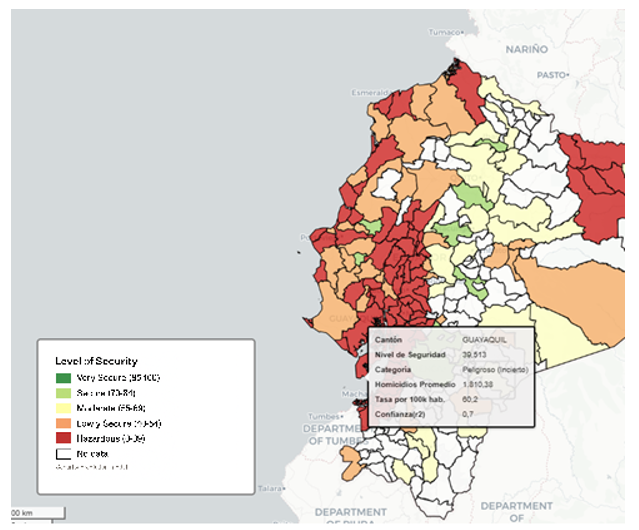
In the context of citizen security, predictive systems for urban violence are essential for preventive decision-making and the efficient allocation of security resources. This work proposes an innovative neutrosophic framework that integrates Fuzzy Qualitative Comparative Analysis ( fsQCA ) with Machine Learning algorithms to predict urban violence patterns in complex and uncertain environments. Neutrosophic logic allows handling the uncertainty, imprecision and inconsistencies inherent in social data, while fsQCA identifies complex causal configurations that traditional statistical methods cannot capture. The developed hybrid model combines Random Forest, fuzzy logic, and neutrosophic logic are used to process homicide data, demographic variables, and socioeconomic factors in Ecuador. The results demonstrate % accuracy in predicting security levels by canton, significantly outperforming traditional deterministic approaches. The developed platform generates interactive, georeferenced visualizations that facilitate understanding of risk patterns and support informed decision-making in citizen security policies. This research contributes to the development of more robust and adaptive predictive systems, establishing a methodological precedent for the application of neutrosophics to public security and social risk management issues.

Downloads
Downloads
Published
License
Copyright (c) 2025 Neutrosophic Sets and Systems

This work is licensed under a Creative Commons Attribution 4.0 International License.